
Low Back Pain: Lumbar Foraminal Stenosis
What is it?
The foraminal is the space created by two lumbar vertebrae and an intervertebral disc.
The foraminal space allows the the spinal cord and nerve roots to exit on either side at each level. Foraminal stenosis can occur when there is narrowing of the foraminal space which can lead to impingement or irritation of the spinal cord or nerve roots.


Symptoms commonly associated with Lumbar Foraminal Stenosis
Symptoms may include:
- Low back pain that can be sharp, shooting, stabbing, dull or achey
- Pins & needles, tingling, numbness in either leg
- Symptoms can be experienced in your low back, gluteals or into your leg
- Symptoms may be aggravated by prolonged standing, or time spent in specific positions (usually involving extension)
Contributing Factors associated with Lumbar Foraminal Stenosis
Possible contributing factors that lead to Lumbar Foraminal Stenosis include (but are not limited to):
MODIFIABLE
- Poor lower back biomechanics and poor movement strategies
- Prolonged or repetitive adverse loading
- Lifestyle factors (work, sport etc)
- Muscle imbalances and strength deficits
- Poor motor patterning
- Poor pelvic stability
NON-MODIFIABLE
- Age
- Individual anatomical variations
- Injury history
Considerations in the management of Lumbar Foraminal Stenosis
SHORT TERM
DIAGNOSIS
Diagnosis is a vital part of managing any injury. Not only is it important to determine which structures are responsible for our symptoms, but why they have become symptomatic. Addressing the ‘why’ will ensure adequate recovery and prevention of future injury.
EDUCATION
It is important that you have an understanding of your diagnosis, and what strategies are important for acute management, and reduction of future injury risk
MOTOR CONTROL
As a contributor to low back pain is often deficits in strength, endurance, stability, patterns of muscle activation etc., these need to be accurately assessed and improved
MANUAL THERAPIES
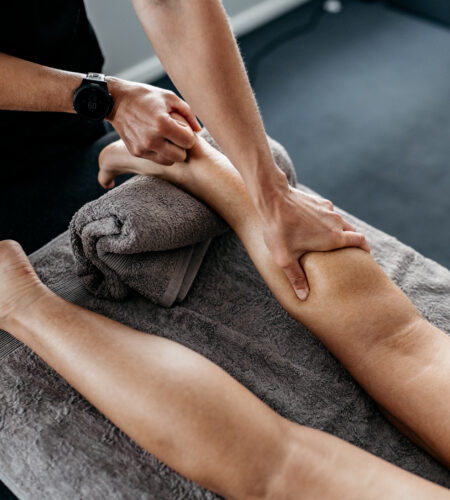
Manual therapies include: Soft tissue techniques, dry needling, joint mobilisation / manipulation etc.; these may be used to assist with symptoms
ACTIVITY MODIFICATION
You will often be advised to avoid provocative activities to allow tissue recovery. Advice around positional changes during activities may also allow symptoms to settle.
MOBILITY
Mobility exercises can improve the ability to adopt certain postures without placing excessive load on nerve roots and in some cases provide an immediate pain relieving effect.
LONG TERM
STRENGTHENING
Strengthening is a vital part of management for low back pain; this often involves progressions into a gym environment to ensure we are appropriately challenging tissues to strengthen, and improving their tolerance to daily living
REFERRAL
As with any injury, sometimes referral to other professionals is required in the management of low back pain. This may include referral for imaging, referral to your GP, or referral pain specialists or orthopaedic surgeons
SUMMARY
If you have any questions about your low back pain or possible lumbar foraminal stenosis, please do not hesitate to contact us on (03) 5229 3911, email us at info@theinjuryclinic.com.au or book an appointment to see one of our physiotherapists in Geelong.
Related insights

Fri Apr 10
STRENGTH AND CONDITIONING FOR RUNNERS
STRENGTH AND CONDITIONING FOR GEELONG RUNNERS Completing planned and structured strength training is essential for maximising not only running performance, but also to give...
Thu Dec 4
Return to Sprinting
Sprinting: Sprinting involves creating forces to project the body horizontally, that can reach speeds over 10m/s, and can reach up to 7-9 times body...
Wed Oct 8
Running Biomechanics & Gait Retraining
Running biomechanics and gait retraining As written by The Injury Clinic physiotherapist Sam Lewis Running is a common activity and sport in Australia,...
Fri May 2
Low Energy Availability
What is Low Energy Availability? Energy availability is defined as the amount of energy available to the body for essential function, after accounting...Explore our physiotherapy services
Musculoskeletal
Physio
At The Injury Clinic Physiotherapy, we work closely with our clients to get them back doing the things they love as soon as possible.
Sports
Physio
The Injury Clinic Physiotherapy works with recreational to elite athletes to keep them injury free and achieving their goals.
Dry
Needling
All physiotherapists at The Injury Clinic are qualified and experienced in dry needling as a treatment technique.
Running Injuries
Physiotherapists at The Injury Clinic Physiotherapy have a special interest in the diagnosis and management of running-related injuries.
Women's Health
Physiotherapy
We have physiotherapists with a special interest in Women's Health, including pre and post partum presentations. Let us work with you to stay fit, active and healthy.
Pre & Post-Operative
Physio
Physiotherapists at The Injury Clinic Physiotherapy work closely with surgeons to ensure best outcomes post surgery.
Injury Q&A
Our clinicians have been answering all your questions!
Running Analysis
The goal of a running analysis is to identify aspects of your technique that may be contributing to injury or impacting on efficiency.
Physiotherapy Geelong
Providing both musculoskeletal and sports physiotherapy services to Geelong and surrounds, let our physio-therapists work with you to diagnose, fix & prevent your injury.
Learn more about our Physio Geelong services

Strength Training Geelong
The Injury Clinic Strength Coaches work with clients to create individual strength programs for injury management, performance enhancement and general health and fitness.
Learn more about our Strength Training Geelong services

Nutrition Geelong
Diet plays an integral part in not only our general wellbeing, but training injury risk and performance. Our dietitians work closely with clients to ensure healthy and sustainable nutrition habits.
Learn More about our Nutrition Geelong services
Schedule your next visit
If you’re interested in booking an appointment with one of our team members, contact our clinic today and we’ll be happy to find time for a consultation.
Schedule Consult


